🧀 Exquisite Gourmet Pairings From artisanal cheeses (Elements) and premium charcuterie (Horizons) to private chef menus (Pinnacle).
🥂 Professional Glassware & Kit We provide everything—high-quality crystal glassware, tasting notes, and equipment. No washing up required.
🏠 Unrivalled Convenience The luxury of a vineyard tour without the travel. Perfect for romantic couples or intimate groups.
📍 Flexible Locations In your home, your office, or at one of our partner venues across the North West.
Choose Your Level of Elevation…
-
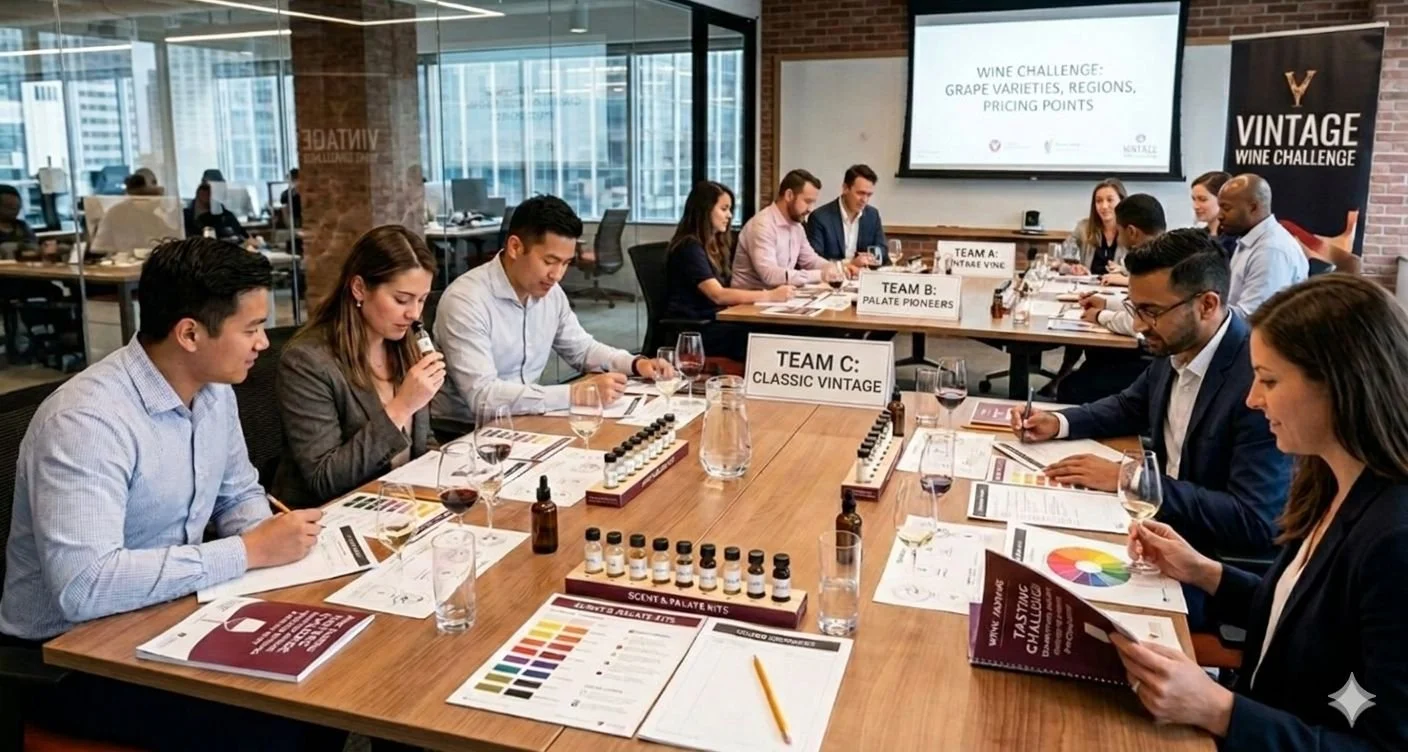
Elements
Perfect for: Morale boosting, ice breakers & internal team socials
A high-energy, interactive session focused on collaboration & healthy competion.
The Format: Choice of:
The Blind Tasting Challenge: Teams compete to identify grape varieties, regions, and price points using guided sensory kits. A high-stakes battle of the palate!
Wine Blending Challenge: Armed with base wines, cylinders & blending kits, teams must balance flavours & ‘pitch’ their final creation to our judges.Key Features: Focuses on communication & collective decision-making. Includes prizes for the winning team.
Result: A shared learning experience that leaves your team feeling valued & significantly more wine-savvy.
Location: Perfect for boardrooms or casual office spaces.
Ideal For: 6-20 guests
Duration: 2 hours -
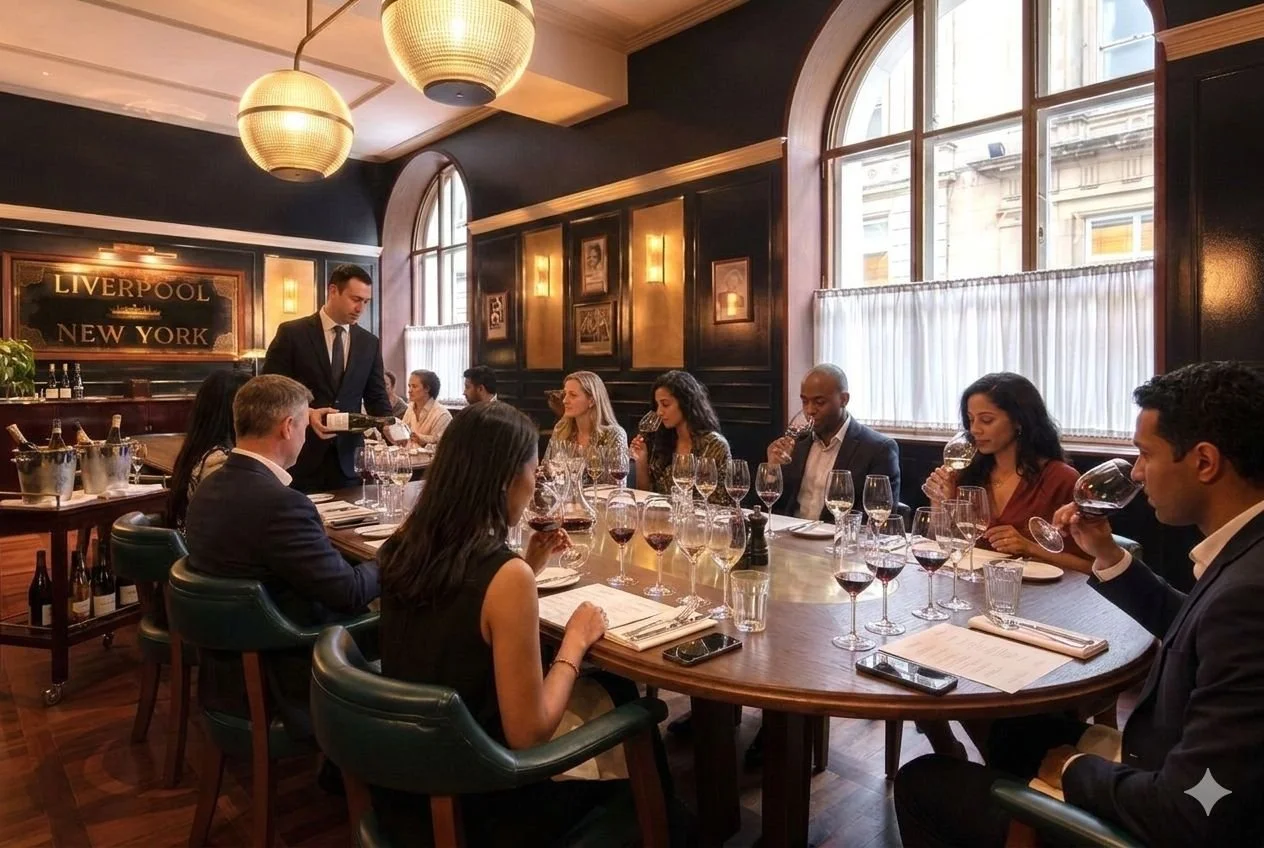
Executive Flight
Perfect for: Client hospitality, board meetings and high level networking
A sophisticated, seated experience focused on premium, world class wines
The Format: A curated journey through 5-6 ‘Investment Grade’ or rare vintage wines. The Wine Director leads an in-depth discussion on viticulture, global market trends and the stories behind the estates.
Key Features: High-end glassware, printed tasting brochures with your company branding and luxury artisan pairings
Result: A deeply impressed client base that views your company as a sophisticated partner capable of delivering world-class experiences.
Location: Ideally suited for private dining rooms or executive suites.
Ideal For: 6- 40 guests
Duration: 2-3 hours
-
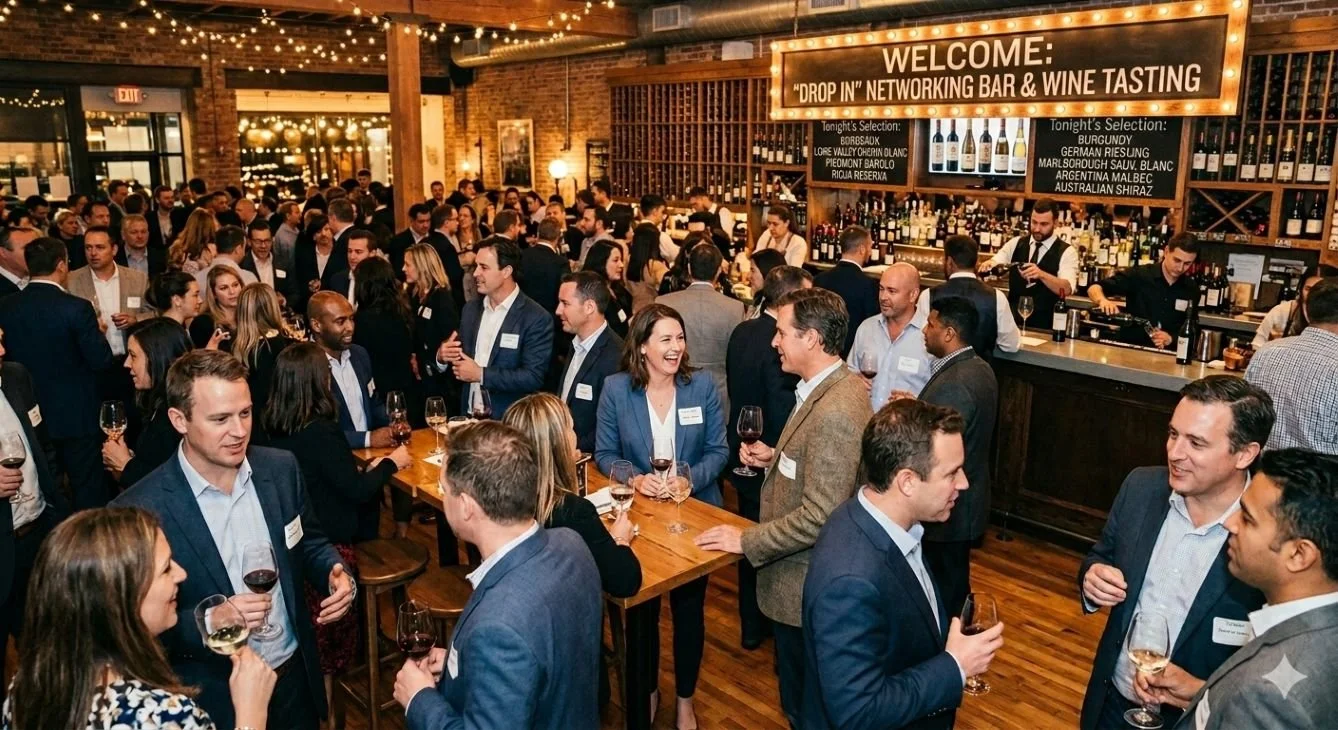
Network Mixer
Perfect for: Client entertaining, launch parties or office socials.
A flexible, semi-structured format taht allows for fluid movement & networking.
The Format: Sophisticated, fluid and low pressure. We set up ‘tasting stations’ around the room, allowing guests to move freely and talk while they taste.
Key Features: A curated selection of 5-6 premium wines, each with a ‘talking point’ story provided by our experts on hand.
The Result: High engagement & natural conversation starters that break the ice far better than a standard open bar.
Location: Large event spaces, foyers or open plan offices.
Ideal For: 20+ guests
Duration: 2-4 hours
The Ultimate Guide to
High-Impact Corporate Hospitality
Why "Hands-On" Beats a Lecture Every Time
Planning a corporate gathering in today’s professional landscape is about far more than just filling a room; it is a strategic exercise in fostering genuine, lasting connections. Whether you are looking to impress high-value stakeholders in a Liverpool boardroom or reward a hardworking internal team across the North West, the era of the "passive observer" event is over.
At Colby Wines, we believe every corporate interaction should deliver a measurable return on your time. This guide explores the sensory science, psychological triggers, and logistical strategies required to turn a standard wine tasting into a remarkable business milestone.
1. The Psychology of Storytelling
Moving Beyond "Lemons & Pears"
Most traditional wine tastings fail because they get bogged down in technical data—acid levels, soil pH, and repetitive descriptors like "lemons and pears". While these facts matter to a sommelier, they often create a barrier for a corporate audience.
Connection over Testing
Success in a business setting comes from making people feel connected to the experience, not tested on their knowledge. We have found that guests engage far more deeply with the "human element"—the heritage of the land and the story of the producer.
Strategy Note:
When you share the story of a winemaker's resilience on the wind-swept terraces of the Northern Rhône, you aren't just discussing viticulture; you are discussing the universal business values of passion and persistence.
The Sensory Bridge: Neuroscience tells us that smell and taste are linked directly to the emotional centre of the brain. By weaving a narrative into the tasting, you create a "memory anchor." Months later, a client might not remember the exact grape variety, but they will remember the story you told—and the company that hosted them while they heard it.
"Success in a business setting comes from making people feel connected to the experience, not tested on their knowledge."
2. The Science of "Healthy" Competition
Breaking Corporate Silos
In many organisations, departments naturally drift into silos. A corporate event is the primary opportunity to cross-pollinate ideas and build rapport between teams that rarely interact.
Collaboration
Teams must talk through sensory perceptions to reach a consensus.
Risk-Taking
Guessing aloud encourages a culture where it is okay to be wrong.
Engagement
Turns a passive drink into an active battle of the palate.
The Blind Tasting Leveler: Activities like our Blind Tasting Challenge use professional sensory kits to level the playing field. When you strip away the label, job titles and hierarchies disappear.
Why it Works for HR: By gamifying the experience, you remove the "cringe" factor of traditional icebreakers. It’s a brilliant way to get different departments collaborating and competing in a relaxed, sophisticated setting.
3. Delivering the "ROI" of Real-World Confidence
A corporate event is truly successful if your guests leave with a new, tangible skill. Wine is a universal language in the business world, yet many professionals find the "wine list moment" at a high-stakes dinner to be a source of quiet anxiety.
Empowering Your Team
Our goal is to ensure that the next time your staff or clients are handed a restaurant wine list, they feel entirely comfortable making a selection.
- 1 Navigating Regions: Understanding the difference between a bold Malbec and a structured Bordeaux.
- 2 Value Finding: How to spot the hidden gems on a list that offer the best price-to-quality ratio.
- 3 Etiquette: The subtle "dos and don'ts" of business dining.
"Team building works best when people have to create something together. Our Wine Blending Challenge mirrors the boardroom—strategy, collaboration, and a bit of flair."
4. The Power of the Blend
Mirroring Boardroom Dynamics
Team building works best when people have to create something tangible together. Our Wine Blending Challenge is a direct mirror of corporate strategy.
The Blending Process
Analysis
Evaluating the raw components (the base wines) with critical objectivity.
Negotiation
Deciding how much of each "ingredient" goes into the final product.
The Pitch
Teams must brand their wine and present their "winning vintage" to the judges.
The Leadership Insight
"This exercise highlights leadership roles and communication styles in a tactile way. It requires flair, collaboration, and decisive action—the exact same traits required to produce a winning business strategy."
5. Passion as a Catalyst
The Host's Role
Whether discussing the sun-baked stones of the South of France or the historic estates of Tuscany, passion is infectious. In a world of automated services, a host who is truly invested in the subject matter changes the room's energy.
Approachability is Key: While the wine may be "Investment Grade," the atmosphere must remain approachable and fun. A great host makes the most complex vintage feel accessible. When the host is invested, the guests will be too.